
Washington has made clear statutory commitments to cut greenhouse gas emissions and build a transportation system that is cleaner, more affordable, and safer for everyone. Because transportation is the state’s largest source of climate pollution, the decisions we make about transportation planning today will shape whether we can meet those goals tomorrow.
Much of the public conversation about climate and transportation focuses on individual projects or funding decisions. But one of the most powerful levers is how we plan regionally. Long-range regional transportation plans built for a typical 20 to 30 year period guide which projects move forward, how communities grow, and how much driving is built into our system for decades.
Right now, there’s a growing conversation in Olympia about updating how regional transportation planning works in Washington. In particular, legislators are considering whether regional plans should better reflect the same climate and mobility goals that cities and counties are already required to plan for.
The proposal would apply only to select RTPOs in large and fast-growing parts of the state, where congestion, emissions, and development pressures are greatest.
Right now, this effort focuses only on planning. It does not mandate specific projects, prohibit roadway investments, or create new funding programs. Instead, it would ensure that regional transportation plans account for greenhouse gas and VMT reduction goals, bringing them into closer alignment with the expectations already placed on cities and counties.
Washington is not alone in doing this. Other states, including California, Colorado, Oregon, and Massachusetts, already require transportation planning to support climate targets. This approach reflects a growing recognition that transportation planning can be a powerful climate policy tool, and that long-range plans must guide where states are trying to go.
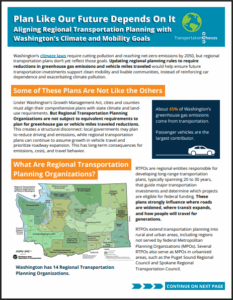
To help unpack what’s at stake, we’ve put together a fact sheet that covers:
- What Regional Transportation Planning Organizations (RTPOs) are and why they matter
- Where current planning requirements fall short
- Why large and fast-growing regions are the focus
- How other states are approaching regional transportation planning and climate alignment
As Washington continues to grow, aligning how we plan transportation with where we want to go as a state is essential. Modernizing and updating regional transportation planning plays a decisive role in whether we deliver cleaner air, lower household costs, and transportation options that work for everyone.