Dear friends,
The 2026 legislative session is over. Thank you for following along with us here as we looked at how legislators’ proposed bills and budgets would impact Washingtonians’ access to safe streets, trails, and transit.
In the end, we had more success influencing the transportation budget than we did with new policy bills, most of which did not survive to the end of session. Given the strain on the transportation budget, it was a difficult year to move forward new policies that would take money to implement. But we were able to influence the transportation budget and preserve funding for a lot of our core priorities.
Changing the Conversation on Transportation Spending
The transportation budget is a statement of our state’s priorities. And fully 19% of the transportation budget is spent on highway capital programs, including a lot of freeway expansion projects that were designed decades ago. That’s in comparison with just 5% spent on public transportation programs, or 3% on rail programs.

The good news is, legislators heard our message loud and clear: the transportation budget is unsustainable, and we must re-evaluate both our revenue and expenses. They committed $100,000 to do a Joint Transportation Committee study of the sustainability of the transportation budget with key stakeholders before next session.
Another signal that things are beginning to change is that the new budget does not commit to funding most projects beyond the next two to four years. Typically, the budget is balanced over six years, but this time, only preservation and maintenance work was balanced over six years. This leaves more room to reconsider projects and the direction of the budget.
We agree with the comments Rep. Barkis made during the Conference Report Committee that “the era of revenue packages is antiquated.” We need to continue to address the ongoing maintenance and preservation backlog beyond the next six years, and this starts with addressing the runaway costs of our capital programs and highway expansion. We also need new long-term sustainable revenue sources like a road usage charge or highway user fee.
We’re just starting to turn the battleship that is transportation spending in our state. Will we continue to pour money into highway expansion projects that make us less safe and increase carbon emissions? Or will we pivot toward a transportation system that gives people the transit, streets, and sidewalks they need to get around safely and sustainably?
Securing Funding for Transit Access and Safety
We had a lot of other concrete budget wins. It’s notable that we did not lose any funding for programs that are helping to make it safer and easier to get around without a car. And we were proud to secure funding for key programs, including:
- Fully restored funding ($77 million) for Regional Mobility Grants, which invest in things like new buses, bus shelters, and transit centers — as well as expanded routes and frequencies — in communities across the state.
- We maintained and restored future funding ($9.8 million) for Commute Trip Reduction programs, which help jurisdictions and employers incentivize workers to drive less, reducing congestion and pollution. In last year’s budget, these programs were not funded past the current biennium.
- $5 million to fund free youth fares on Amtrak Cascades, ensuring kids can take transit for free all across our state.
- $3.3 million for Community and Technical College transit access passes, expanding free or low-fare options to students at every community college in the state. We supported this idea as a bill and we are happy to see it in the budget.
- $12 million for Tribal Transit Grants and $500,000 for tribal traffic safety support.
We also secured $250,000 to help WSDOT develop a comprehensive Megaproject for Safety program. This was one of our top priorities this session, and it will lay the groundwork for Washington to reimagine and redesign state-owned main street highways, which are some of our state’s busiest transit corridors and most dangerous roads for people walking and biking.
A Win and a Loss on Helping to Build Light Rail Faster
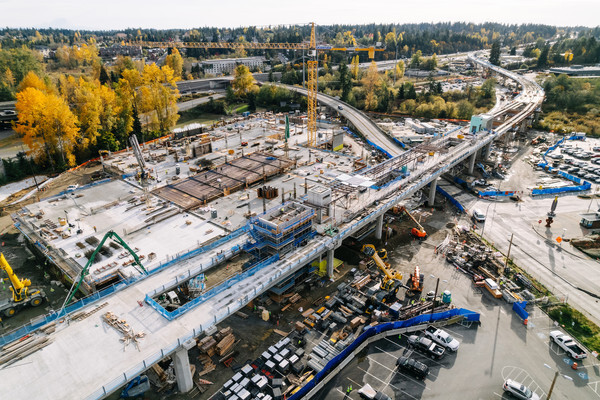 Another of our top priorities this session was to use every state lever to build light rail faster for riders. As Sound Transit deals with $35 billion in cost overruns on their long-range plan, they need all the tools they can get to avoid cutting back on voter-approved light rail projects.
A bill to give Sound Transit enhanced permitting tools to build light rail faster (SB 6309) was delivered to Governor Ferguson last week. If signed, this bill will allow Sound Transit to apply for construction permits on properties they don’t yet own, and before local jurisdictions give the green light. This will help save time and money, and is the first step of many to reform permitting in order to expedite critical light rail projects.
Unfortunately, a bill to give Sound Transit 75-year bonding authority (SB 6148) did not move forward this session. This would have been another tool that would help Sound Transit build light rail as quickly as possible in the face of sustained inflation that has significantly increased construction costs.
In the coming weeks and months, we’ll be hearing a lot more from Sound Transit on how they plan to cut costs and build out projects. To help bring these conversations to the public, we’re hosting a series of Transit Town Halls with our partners in the Build the Damn Trains coalition. Join us on the Eastside, and in Snohomish County, Pierce County, and Seattle (details still to come), to hear directly from Sound Transit staff and Board Members.
We’ll be publishing a blog post with further reflections on the legislative session later this week. Look for it in our upcoming newsletter.
Thanks for your support this session, and for everything you do to support safe, sustainable, and equitable transportation in Washington State.
Ride on,
– Transportation Choices Coalition