
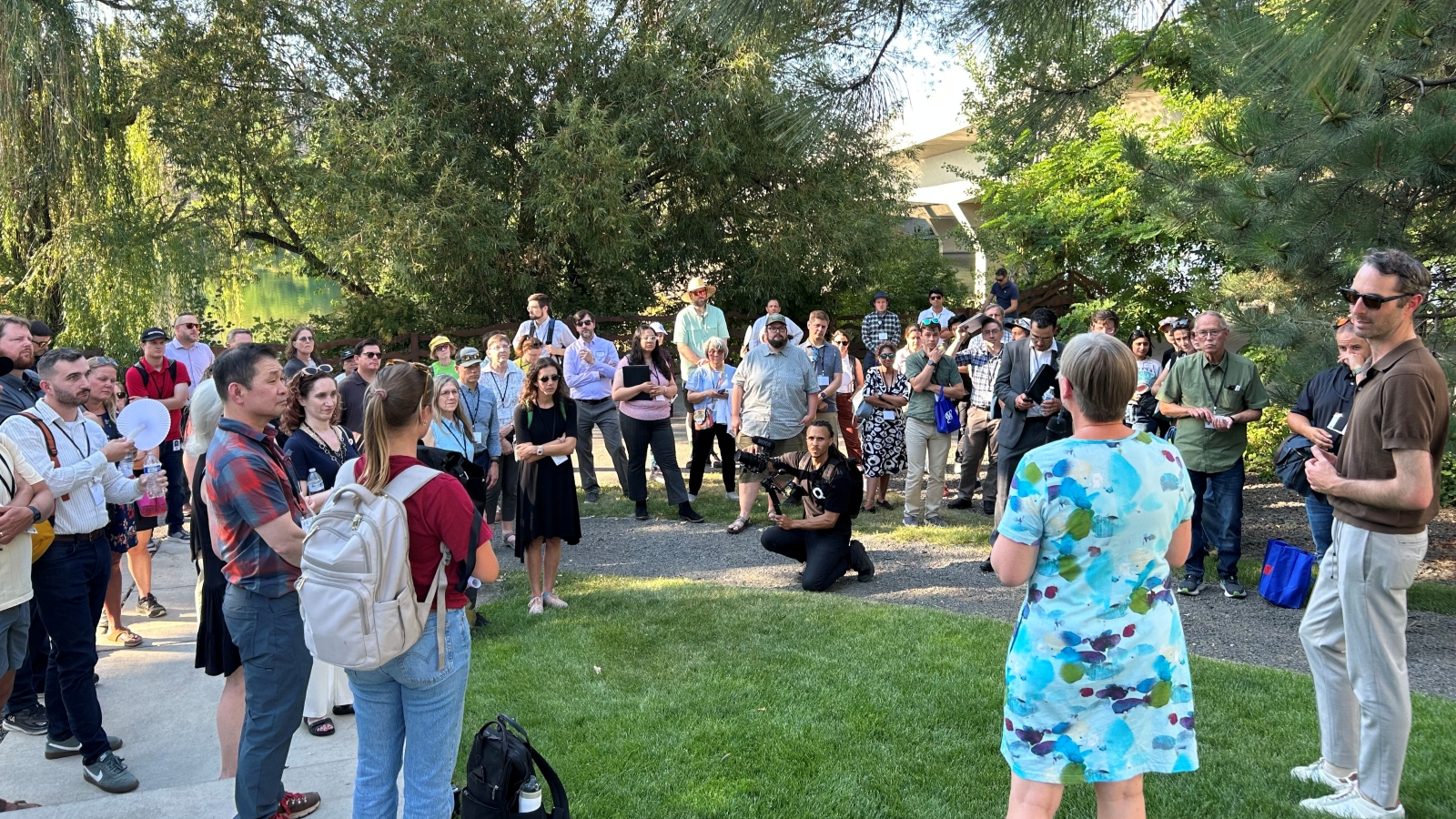
On July 16, Transportation Choices Coalition hosted our first Megaproject for Safety Walk & Talk along Spokane’s Division Street. Division is one of Washington’s most vital but dangerous urban corridors, also known as main street highways. The Walk & Talk brought together over 70 community members, advocates, agency staff, and elected leaders to walk a mile-long route and experience firsthand what it’s like to navigate Division Street without a car. Along the way, we paused at various intersections to hear from local and statewide leaders who offered insights into the corridor’s history, ongoing projects, and vision for what’s possible.
Why Division Street?
Division Street plays a dual role: it’s a state highway and Spokane’s primary transit corridor. It connects neighborhoods and supports thousands of transit riders daily while also serving as a commercial spine lined with apartments and businesses. But it also reflects a design legacy that prioritizes vehicle speed over community safety and no longer fits the needs of the growing, multimodal city it runs through.
Division Street and similar corridors in cities like Tacoma, Seattle, and Monroe were built to prioritize fast vehicle movement, not to serve as community centers. As cities have grown, these roads have become neighborhood hubs lined with dense housing, transit routes, small businesses, schools, and jobs. Despite their central role, they remain some of the deadliest places for people walking and biking. In 2023, nearly half of pedestrian fatalities in Washington occurred on these state-owned main street highways, marking a public safety crisis.
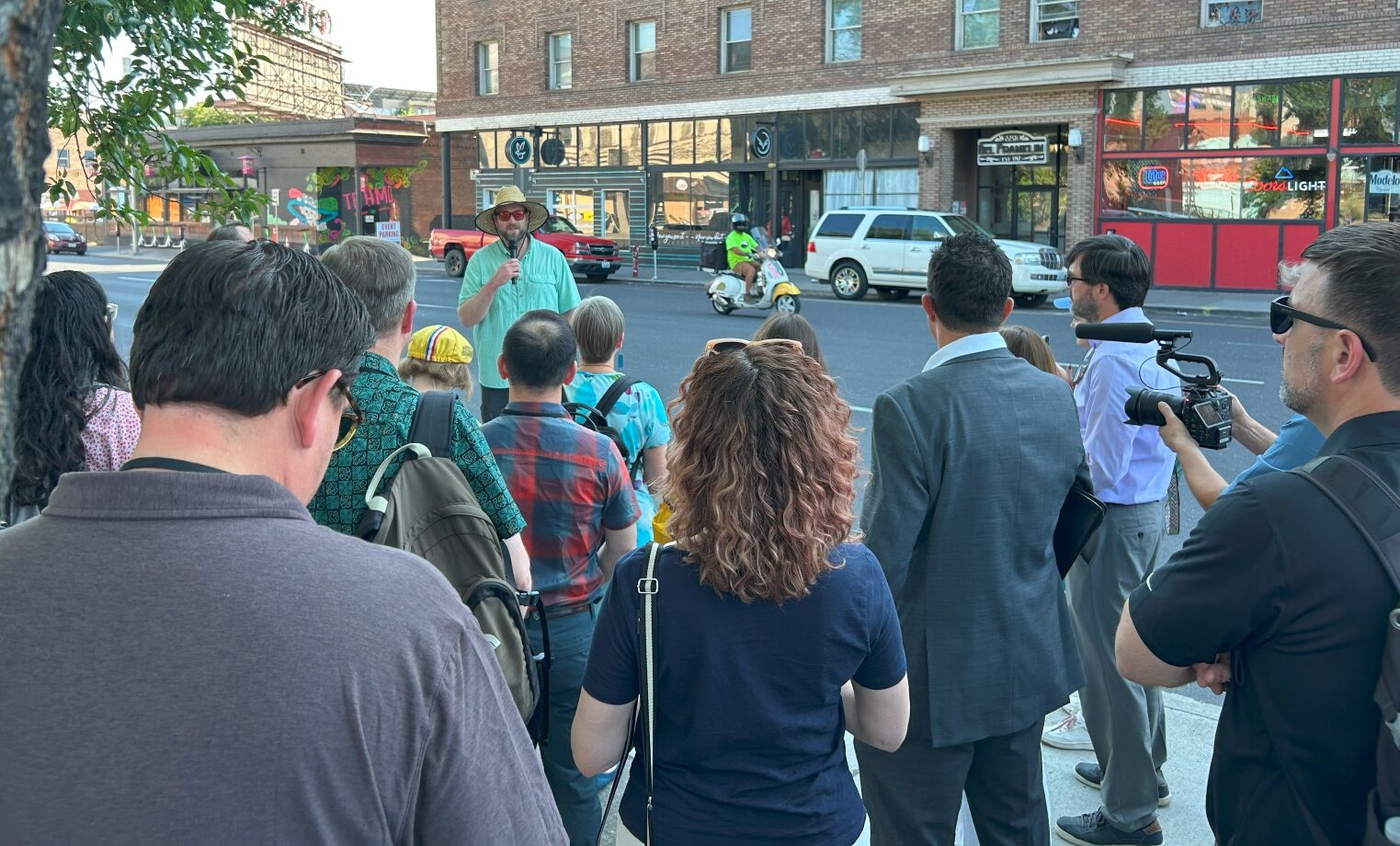
Erik Lowe, Founder of Spokane Reimagined, speaks to Walk & Talk attendees.
What We Learned
Starting at the Spokane Convention Center, participants followed a route along E Spokane Falls Blvd, N Division Street, and W Main Avenue. Along the way, we heard from Jon Snyder, Director of Transportation and Sustainability for the City of Spokane, Erik Lowe, Founder of Spokane Reimagined, Barb Chamberlain, Director of the Active Transportation Division for Washington State Department of Transportation, and Daniel Wells, Director of Capital Development for Spokane Transit Authority.
TCC used the Taskar Center’s OpenSidewalks OS-CONNECT data to map an area of Division Avenue, and collect observational and participant-driven data through a walk audit survey. The OpenSidewalks OS Connect dataset is a detailed, accessibility-focused map of Washington State’s sidewalks, prioritizing data collection in overburdened communities and providing tools for easy visualization and use.
What we encountered told a complex story: narrow sidewalks squeezed next to fast traffic, outdated infrastructure, and few safe places to cross. Throughout the walk, several clear themes surfaced:
Design matters
Even small infrastructure changes can make a big difference in how safe and welcoming a street feels. Several participants noted how even modest changes like wider sidewalks or a better buffer from moving traffic could dramatically improve the experience for people walking, rolling, and riding transit. Tools like the Washington State Department of Transportation’s Target Zero plan, Safe System Approach, and Complete Streets policies provide a clear framework for making these kinds of safety improvements. But to truly transform corridors like Division Street, we must center the needs of non-drivers and ensure that people walking, biking, and taking transit are treated as primary users, not afterthoughts.
Transit access is key
One of the most promising tools for reimagining Division Street is the upcoming Division Street Bus Rapid Transit (BRT) line. BRT and other transit investments can serve as launching points for broader transit-oriented development that is burgeoning across Washington, fostering walkability, safety, and more vibrant neighborhoods. Transit features like dedicated bus lanes, improved pedestrian crossings, and accessible stations can be paired with design improvements like wider sidewalks, better lighting, and protected bike lanes to create safer, more inclusive streets.
Local voices are essential
Seeing real-world conditions and hearing lived experiences provide powerful context that data alone can’t deliver. Local partners, including the City of Spokane, Spokane Reimagined, and Spokane Transit Authority, played a critical role in shaping and informing the walk. Their involvement underscored the importance of aligning community-driven needs with state-level investment. Spokane Reimagined, in particular, brings a long-term vision for more equitable, people-centered growth that complements safety-focused transportation changes. When state agencies like WSDOT work in tandem with local partners and elevate community input, the result is a more responsive, just, and effective path forward.
We can’t wait
With high fatality rates on state-owned main streets, the urgency to act has never been greater. In 2023, Washington experienced its highest number of traffic fatalities since 1990, with someone losing their life on Washington roads every 13 hours. More people were killed walking or biking than in any other year on record, and 47% of these fatalities occurred on roads managed by the state.
From Division Street to Statewide
During the 2025 legislative session, TCC successfully secured $100 million in the state transportation budget (starting in the 2027–2029 biennium) to fund Megaproject for Safety investments. This is a significant step forward and a sign lawmakers are taking this crisis seriously. However, the need is far greater, which is why events like the Walk & Talk are so crucial. They bring abstract policy into sharp local focus, giving decision-makers a chance to see real conditions up close and community members a platform to share their experiences and vision for change.
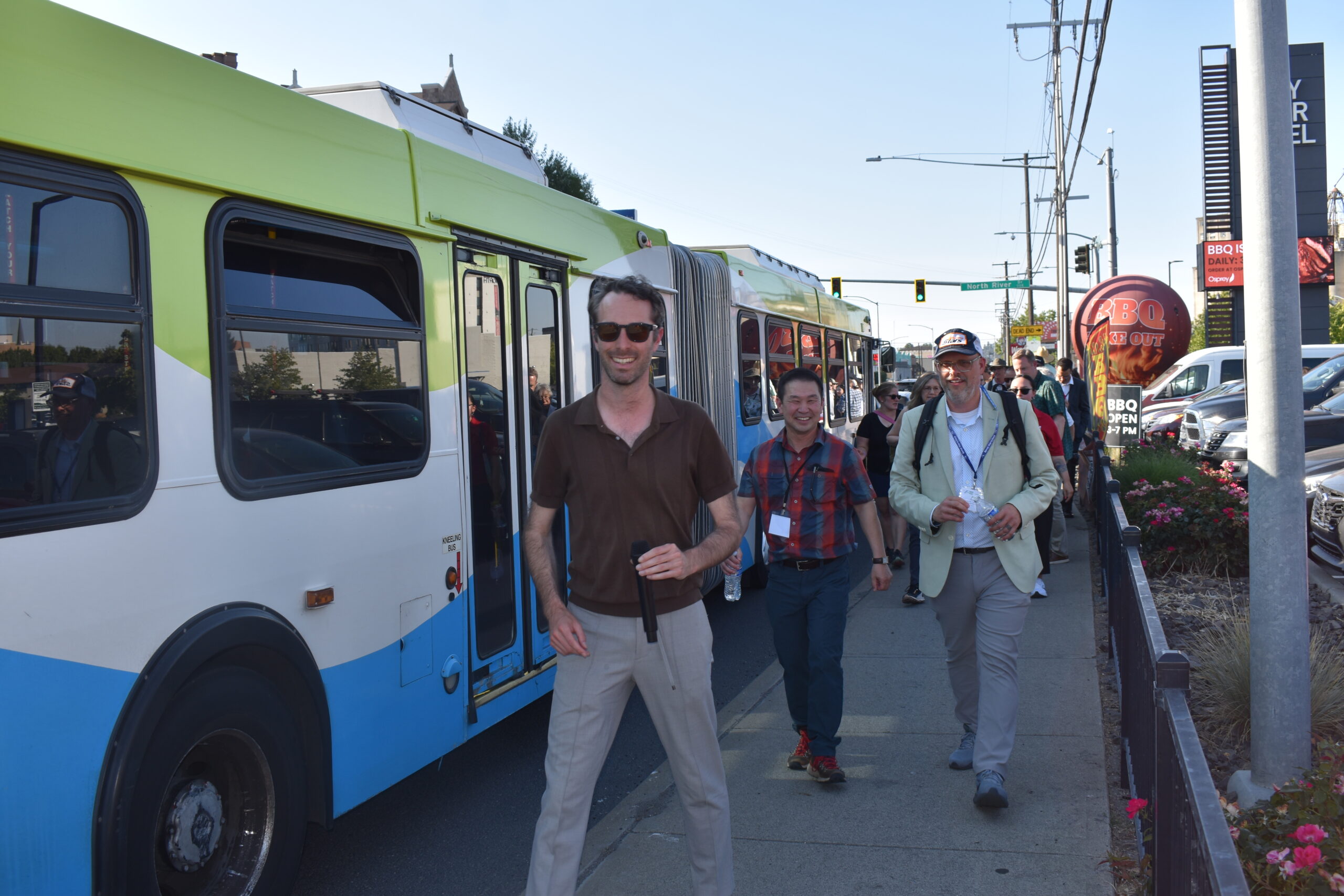
Kirk Hovenkotter leads a crowd on Division Street. Photo by Eliza Billingham/Spokane Public Radio.
What Comes Next
This Walk & Talk wasn’t just a walk. It was a call to action. It was the first of future advocacy TCC hopes to do in collaboration with local partners to reimagine similar main street highways across Washington as streets that prioritize safety and accessibility.
We’ll be using what we learned on this walk, from observations to conversations, to inform our advocacy at both the state and local level. That includes pushing for expanded investment in safety improvements, supporting the implementation of planned changes, and working with our partners to build long-term momentum for transformation in Spokane and beyond.
And we’re not stopping here. The Division Street Walk & Talk is the first of several we’ll host across Washington to elevate the realities of main street highways and help shape a safer, more equitable transportation system for everyone.
This work was supported by a generous grant from the Taskar Center’s Specialized Community-Led Impact Opportunity (SCLIO) program.
Stay Engaged With Our Megaproject for Safety Work!
Sign up for our email newsletter to find out about future Walk & Talks, events, and advocacy opportunities here.
Hear what the media is saying about Division Street and the Megaproject for Safety:
- Make Safety the Main Thing: Statewide nonprofit wants “main street highways” to be better for everyone | Spokane Public Radio
- How can Division Street be safer for everyone? 74 advocates walk it to find out. | Range Media
- State and local transportation advocacy groups push for safety improvements to state-owned highways like Division Street | Inlander
Ride on!
– Transportation Choices